


Equipment Selection Recommendation: M26 Composite LPG Cylinder Valve Seat
21 September 2026
Equipment Application Scenario:
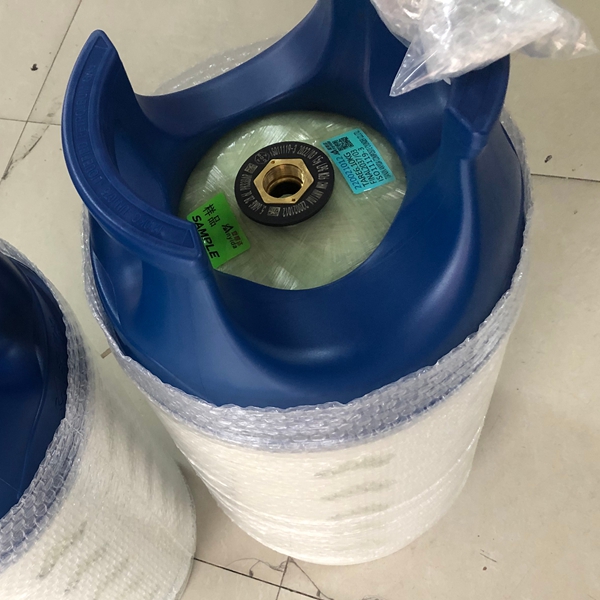
Brass inserts at the neck of Type IV fully-wound plastic liner cylinders. Their core function is to form a reliable threaded metal interface for sealing, to connect the cylinder valve and prevent gas leakage along the boundary between the plastic liner and metal component. This type of cylinder represents the mainstream technical solution for lightweight hydrogen storage in composite LPG tanks, hydrogen-powered heavy-duty trucks, logistics vehicles and other commercial vehicles. The liner is made of high-density polyethylene or polyamide, and the outer layer adopts glass fiber and carbon fiber full winding to bear structural loads. A brass metal part must be embedded at the cylinder neck to provide threaded connection and sealing interface.This embedded neck sealing structure of plastic-lined cylinder reinforced by glass fiber and carbon fiber winding consists of metal insert, plastic liner neck, cylinder valve, sealing ring and carbon fiber winding layer.
Structure and Functions of Brass Insert:
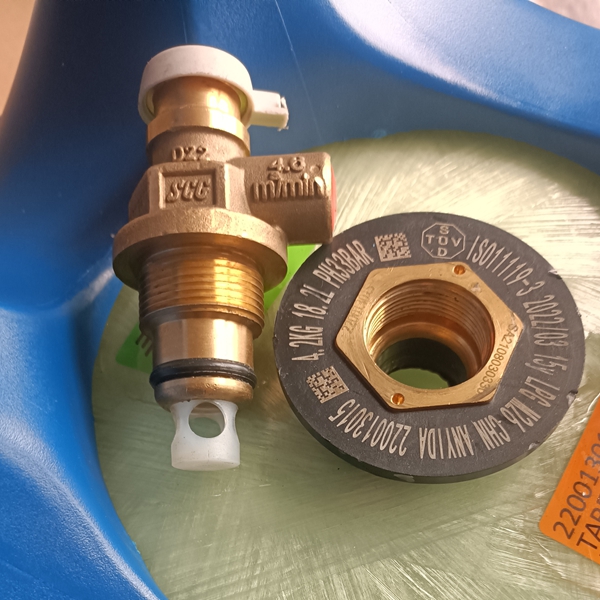
1. Threaded Interface: Internal threads are machined on the inner bore of the brass insert to mate with external threads of the cylinder valve, forming a repeatedly mountable and demountable valve seat interface.
2. Sealing Function: A sealing groove is usually machined at the root where the insert contacts the plastic liner, fitted with a sealing ring to prevent LPG leakage along the bonding interface between plastic and metal.
3. Anchoring Design: Annular bosses, dovetail grooves or external knurling structures are commonly arranged on the outer side of the insert to enhance gripping force and pull-out resistance with the plastic liner, so as to avoid separation between metal and plastic during repeated gas filling and discharging cycles.
4. Material Selection: Brass is the primary material; C3604 lead-free eco-friendly brass complying with RoHS requirements is adopted for some applications. Patents also mention aluminum or brass as alternatives, with high-density polyethylene as the outer plastic material.
Key Technical Challenges:
1. Interfacial Sealing: Plastic and metal have large differences in thermal expansion coefficients. Gaps tend to form at the interface under temperature cycling (operating temperature: -40℃ ~ 85℃), which is the main source of leakage risk.
2. Liner Buckling: Plastic liner has insufficient rigidity and is prone to inward collapse under fiber tension during winding. Structural design of the insert area must balance supporting performance and sealing performance.
3. Bonding Strength: The geometric design of inserts (e.g. dovetail grooves, reinforcing protrusions) shall ensure firm bonding between plastic and metal to prevent separation after repeated filling cycles.
Core Equipment List:
1. Horizontal Injection Molding Machine
● Model: 120T ~ 160T Servo Injection Molding Machine
● Rationale: The valve seat has a small projected area and requires pre-embedded inserts, thus stable clamping force is needed. Servo machines feature energy saving and stable packing pressure to avoid cracking at the interface between plastic and brass insert (critical for cylinder pressure resistance).
● Optional accessory: Automatic insert loading manipulator. Manual insert loading suffers low efficiency; automatic loading delivers better consistency for mass production.
2. Custom Mold
● 2-cavity / 4-cavity mold. Built-in positioning structure for precise fixation of M26 brass inserts to prevent displacement of brass parts during injection molding.
3. Auxiliary Equipment
● Fiber Laser Marking Machine (20W/30W): Engrave QR codes, serial numbers, "M26", "CN" marks (characters shown in the picture) on black plastic surfaces.
● Material Dryer: Glass fiber reinforced plastics must be dried to avoid pores.
● Mold Temperature Controller: Regulate mold temperature to stabilize shrinkage of glass fiber reinforced plastic and prevent loosening of inserts.
4. Fully-Automatic Manipulator for Insert Embedding
● Brand & Model: Borunte BRTR08WDS0 + vibratory feeder for brass insert feeding. The vibratory feeder automatically sorts M26 brass inserts. The manipulator picks and places inserts into the mold, and ejects finished parts after molding, with interlock of low-pressure protection signal.
5. Plastic Dryer
● Model: SHD-80; 80kg Hopper Dryer. PA66+GF material needs drying at 120℃ for 4 hours to remove moisture and avoid pores and bubbles on finished parts (fatal defects for gas cylinders). Special model for glass fiber filled material with hot air circulation.
6. Mold Temperature Controller
● Model: STM-600-W Water-type Mold Temperature Controller; 6KW. Constant mold temperature control at 80~100℃ to stabilize shrinkage rate and prevent cracking at the interface between brass insert and plastic. Water-type controller applies to PA66+GF; oil-type mold temperature controller (180℃) is required if the substrate is changed to PPA.
7. Granulator
● Model: SG-16 Sprue Granulator. Crush sprue waste for recycling. Blades specially designed for glass fiber filled plastics to recycle sprues and reduce raw material cost.
8. Chiller
● Model: SIC-5A 5HP Air-cooled Chiller. For cooling the barrel of injection molding machine and mold to stabilize molding cycle; standard cooling unit for 160T injection molding machine.
9. Trimming Tooling
● Pneumatic trimming knife and custom simple pneumatic trimming fixture to remove flash on part parting line and clean burrs. Manual trimming for small batches; ultrasonic deburring can be upgraded for high-volume production.
10. M26 Brass Thread Go/No-Go Gauge
● Accuracy Class 6H, for brass thread inspection, to verify internal threads of pre-embedded brass inserts.
11. Sealing Groove Go/No-Go Gauge
● Custom form gauge for inspection of O-ring groove, hexagon profile and concentricity; full inspection of critical dimensions of valve seat.
12. Simple Tensile Test Fixture
Brass inserts at the neck of Type IV fully-wound plastic liner cylinders. Their core function is to form a reliable threaded metal interface for sealing, to connect the cylinder valve and prevent gas leakage along the boundary between the plastic liner and metal component. This type of cylinder represents the mainstream technical solution for lightweight hydrogen storage in composite LPG tanks, hydrogen-powered heavy-duty trucks, logistics vehicles and other commercial vehicles. The liner is made of high-density polyethylene or polyamide, and the outer layer adopts glass fiber and carbon fiber full winding to bear structural loads. A brass metal part must be embedded at the cylinder neck to provide threaded connection and sealing interface.This embedded neck sealing structure of plastic-lined cylinder reinforced by glass fiber and carbon fiber winding consists of metal insert, plastic liner neck, cylinder valve, sealing ring and carbon fiber winding layer.
Structure and Functions of Brass Insert:
1. Threaded Interface: Internal threads are machined on the inner bore of the brass insert to mate with external threads of the cylinder valve, forming a repeatedly mountable and demountable valve seat interface.
2. Sealing Function: A sealing groove is usually machined at the root where the insert contacts the plastic liner, fitted with a sealing ring to prevent LPG leakage along the bonding interface between plastic and metal.
3. Anchoring Design: Annular bosses, dovetail grooves or external knurling structures are commonly arranged on the outer side of the insert to enhance gripping force and pull-out resistance with the plastic liner, so as to avoid separation between metal and plastic during repeated gas filling and discharging cycles.
4. Material Selection: Brass is the primary material; C3604 lead-free eco-friendly brass complying with RoHS requirements is adopted for some applications. Patents also mention aluminum or brass as alternatives, with high-density polyethylene as the outer plastic material.
Key Technical Challenges:
1. Interfacial Sealing: Plastic and metal have large differences in thermal expansion coefficients. Gaps tend to form at the interface under temperature cycling (operating temperature: -40℃ ~ 85℃), which is the main source of leakage risk.
2. Liner Buckling: Plastic liner has insufficient rigidity and is prone to inward collapse under fiber tension during winding. Structural design of the insert area must balance supporting performance and sealing performance.
3. Bonding Strength: The geometric design of inserts (e.g. dovetail grooves, reinforcing protrusions) shall ensure firm bonding between plastic and metal to prevent separation after repeated filling cycles.
Core Equipment List:
1. Horizontal Injection Molding Machine
● Model: 120T ~ 160T Servo Injection Molding Machine
● Rationale: The valve seat has a small projected area and requires pre-embedded inserts, thus stable clamping force is needed. Servo machines feature energy saving and stable packing pressure to avoid cracking at the interface between plastic and brass insert (critical for cylinder pressure resistance).
● Optional accessory: Automatic insert loading manipulator. Manual insert loading suffers low efficiency; automatic loading delivers better consistency for mass production.
2. Custom Mold
● 2-cavity / 4-cavity mold. Built-in positioning structure for precise fixation of M26 brass inserts to prevent displacement of brass parts during injection molding.
3. Auxiliary Equipment
● Fiber Laser Marking Machine (20W/30W): Engrave QR codes, serial numbers, "M26", "CN" marks (characters shown in the picture) on black plastic surfaces.
● Material Dryer: Glass fiber reinforced plastics must be dried to avoid pores.
● Mold Temperature Controller: Regulate mold temperature to stabilize shrinkage of glass fiber reinforced plastic and prevent loosening of inserts.
4. Fully-Automatic Manipulator for Insert Embedding
● Brand & Model: Borunte BRTR08WDS0 + vibratory feeder for brass insert feeding. The vibratory feeder automatically sorts M26 brass inserts. The manipulator picks and places inserts into the mold, and ejects finished parts after molding, with interlock of low-pressure protection signal.
5. Plastic Dryer
● Model: SHD-80; 80kg Hopper Dryer. PA66+GF material needs drying at 120℃ for 4 hours to remove moisture and avoid pores and bubbles on finished parts (fatal defects for gas cylinders). Special model for glass fiber filled material with hot air circulation.
6. Mold Temperature Controller
● Model: STM-600-W Water-type Mold Temperature Controller; 6KW. Constant mold temperature control at 80~100℃ to stabilize shrinkage rate and prevent cracking at the interface between brass insert and plastic. Water-type controller applies to PA66+GF; oil-type mold temperature controller (180℃) is required if the substrate is changed to PPA.
7. Granulator
● Model: SG-16 Sprue Granulator. Crush sprue waste for recycling. Blades specially designed for glass fiber filled plastics to recycle sprues and reduce raw material cost.
8. Chiller
● Model: SIC-5A 5HP Air-cooled Chiller. For cooling the barrel of injection molding machine and mold to stabilize molding cycle; standard cooling unit for 160T injection molding machine.
9. Trimming Tooling
● Pneumatic trimming knife and custom simple pneumatic trimming fixture to remove flash on part parting line and clean burrs. Manual trimming for small batches; ultrasonic deburring can be upgraded for high-volume production.
10. M26 Brass Thread Go/No-Go Gauge
● Accuracy Class 6H, for brass thread inspection, to verify internal threads of pre-embedded brass inserts.
11. Sealing Groove Go/No-Go Gauge
● Custom form gauge for inspection of O-ring groove, hexagon profile and concentricity; full inspection of critical dimensions of valve seat.
12. Simple Tensile Test Fixture
● Manual tensile tester to test pull-out force between plastic and brass insert, verifying insert bonding strength, one of the core safety tests for gas cylinders.
Previous: gas cylinder inspection line
Next: Is the last one